

2025
The fourth volume of the *Fora da Curva* series features the stories of major investors and entrepreneurs who have helped transform the markets in which they operate. These are admirable yet complex stories, filled with trials, errors, and memorable successes.
The transformations that have taken place in society, politics, and the economy in recent years have been extremely rapid—and the repercussions on business and investments are evident, though not always obvious. From the stock market to venture capital, from special situations to tax credits, from infrastructure to multimarket funds: the world of investing has become more complex, and few are able to stand out and deliver consistent results over several years.
In *Beyond the New Curve*, thirteen of the country’s leading investors and entrepreneurs discuss how they have faced these changes, both personally and professionally, offering valuable advice to those deciding on their career paths and to those who wish to start a business and better understand the world of investing.
Featuring insights from Alex Behring, Andrea Pinheiro, Daniel Goldberg, Elie Horn, Felipe Guerra, Luiz Barsi, Luiz Felipe Dias de Souza, Marcelo Claure, Octávio Magalhães, Paulo Guedes, Ralph Gustavo Rosenberg, Sara Delfim, and Tania Sztamfater Chocolat.
2021
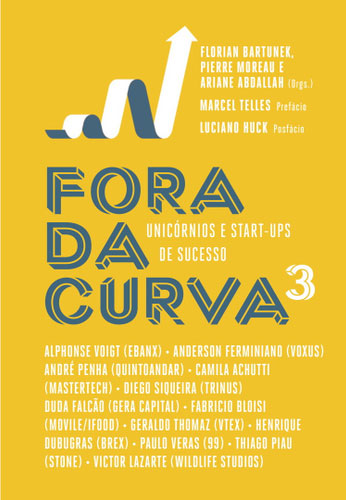
The third volume of the Fora da curva series features twelve Brazilian leaders heading unicorns and start-ups that are innovating across various markets.
Ebanx, Voxus, QuintoAndar, Mastertech, Trinus, Gera Capital, VTEX, Movile, iFood, Stone, Brex, 99, and Wildlife Studios.
These start-ups offer diverse services and have distinct goals, but they all share a common trait: they are transforming entire sectors and expanding market horizons.
Although successful, these companies faced challenges demonstrating that failure is part of the process. In the narratives presented in this volume of the Fora da curva series, the leaders of these start-ups share the dilemmas they encountered since discovering their entrepreneurial calling.
The stories are unique, but the accounts reveal passion, boldness, and resilience — essential traits for turning dreams into reality.
At the end of each account, there is a summary of the key takeaways from the interviewees’ experiences, as well as book recommendations that can help those seeking inspiration and guidance to bring their disruptive ideas to life.
Testimonies from Alphonse Voigt, Anderson Ferminiano, André Penha, Camila Achutti, Diego Siqueira, Duda Falcão, Geraldo Thomaz, Fabricio Bloisi, Henrique Dubugras, Paulo Veras, Thiago Piau, and Victor Lazarte.
Written by Florian Bartunek, Pierre Moreau, and Ariane Abdallah (eds.); Preface by Marcel Telles; Presentation by Florian Bartunek; Introduction by Ariane Abdallah and Pierre Moreau;
Afterword by Luciano Huck. – 1st ed. São Paulo: Portfolio-Penguin, 2021
2020
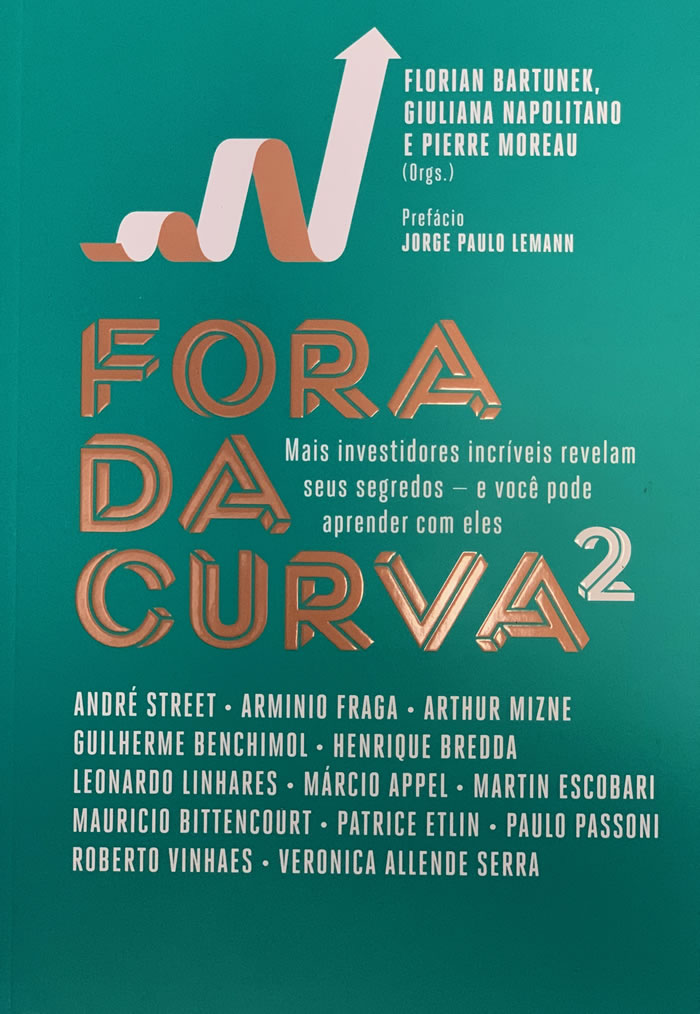
More amazing investors reveal their secrets – and what you can learn from them / Florian Bartunek, Giuliana Napolitano, Pierre Moreau (eds.); Preface by Jorge Paulo Lemann;
Presentation by Florian Bartunek; Introduction by Giuliana Napolitano and Pierre Moreau – 1st ed. – São Paulo: Portfolio-Penguin, a division of Editora Schwarcz S.A, 2020.
Entrepreneurs, fund managers, a former president of the Central Bank. The thirteen financial market icons featured in this book have distinct stories but exhibit some common traits that stand out. A willingness to take risks and stand out from the crowd is one of them.
How they handle mistakes over the years is another. In first-person accounts rich in detail, they discuss careers and investments. They explain how they make financial decisions, how they stay grounded when making money, and how they deal with failure. They also reveal the doubts they had at the start of their careers and the obstacles they had to overcome.
At the end of each chapter, there is a summary of the key advice from each interviewee, which can help those who want to invest better and those seeking inspiration to choose a profession or make a career change.
2018
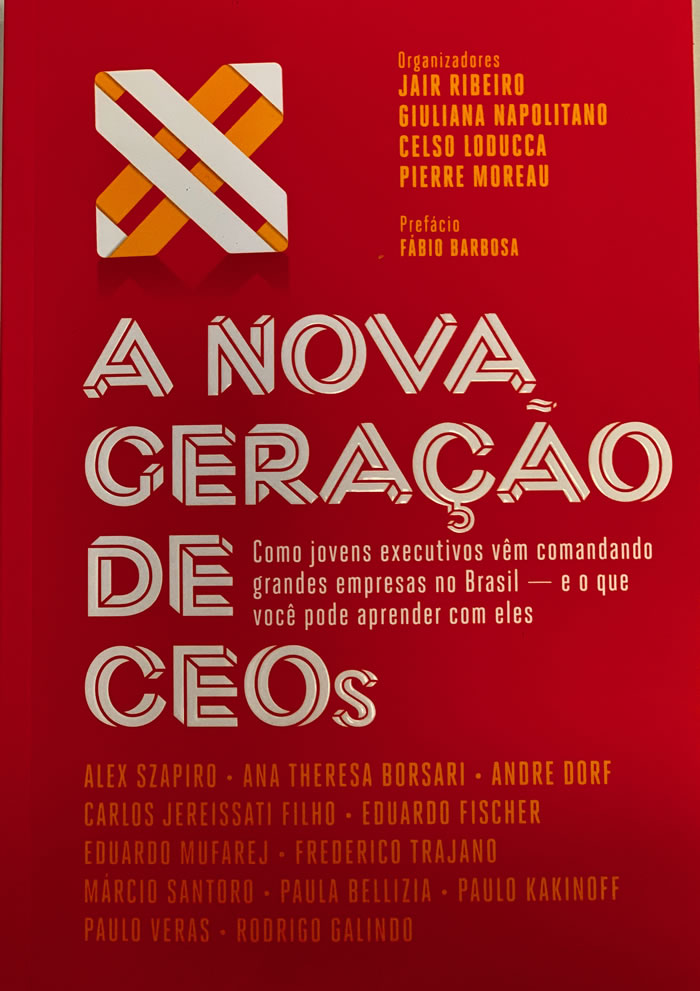
How young executives are leading major companies in Brazil – and what you can learn from them/ Jair Ribeiro, Giuliana Napolitano, Helso Loducca, and Pierre Moreau (eds.); Preface by Fábio Barbosa; Presentation by Giuliana Napolitano – 1st ed. – São Paulo: Portfolio-Penguin, a division of Editora Schwarcz S.A, 2018.
Aiming to share the backstage of the careers of successful CEOs, this book shows that hard work, passion, competence, and, above all, common purposes and attitudes drive these leaders, their teams, and – why not? – the world.
Leading vibrant companies, the executives featured here are part of the 7% who, according to our research, possess both hard skills – such as knowledge of finance, processes, and strategy – and soft skills – such as mobilization and leadership. Another 68% have mainly hard skills: 15% have soft skills, and 10% are still finding their way.
Of these 7%, only 2% are considered statesman-like leaders: their actions are oriented not only towards the company's results but also towards the common good. They understand that they are not playing alone and that their challenge is to create an environment that fosters both individual and team
protagonism. Easier said than done.
A Nova Geração de CEOs captures the lessons learned, the challenges, and the successes of these leaders. Enjoy these accounts and go beyond: identify purpose, the delicate balance between personal and professional life, mistakes, successes, and teamwork competence. No one is perfect, but a team can be.

2017
Organization by Pierre Moreau – São Paulo: Três Estrelas, 2017.
Amid the turmoil of corruption scandals sweeping the country, it is curious to note: this book features only violent crimes, none of white-collar crimes.
Even when the figure of PC Farias emerges, what matters is not the ethical deviations of the Collor era, but the mysteries surrounding his death.
In the case of racism (Siegfried Ellwanger), an apparent exception,
what is of interest is the memory of the Holocaust.
The processes and trials collected in Grandes Crimes transport us to the fascinating world of motivations and cruelty: 'irresistible coercion,' 'tendencies towards theatricality,' 'sensory deprivation,' 'relevant moral value,' 'forgivable violence,' 'loving obsession,' 'coleric fermentation,' 'outburst,' 'impulse,' 'honor,' 'cowardice,' 'emotion,' 'betrayal,' 'vilification.'
The narratives deal with dismembered bodies, packaged, disappeared, eaten, decayed, or simply fallen and photographed.
2016
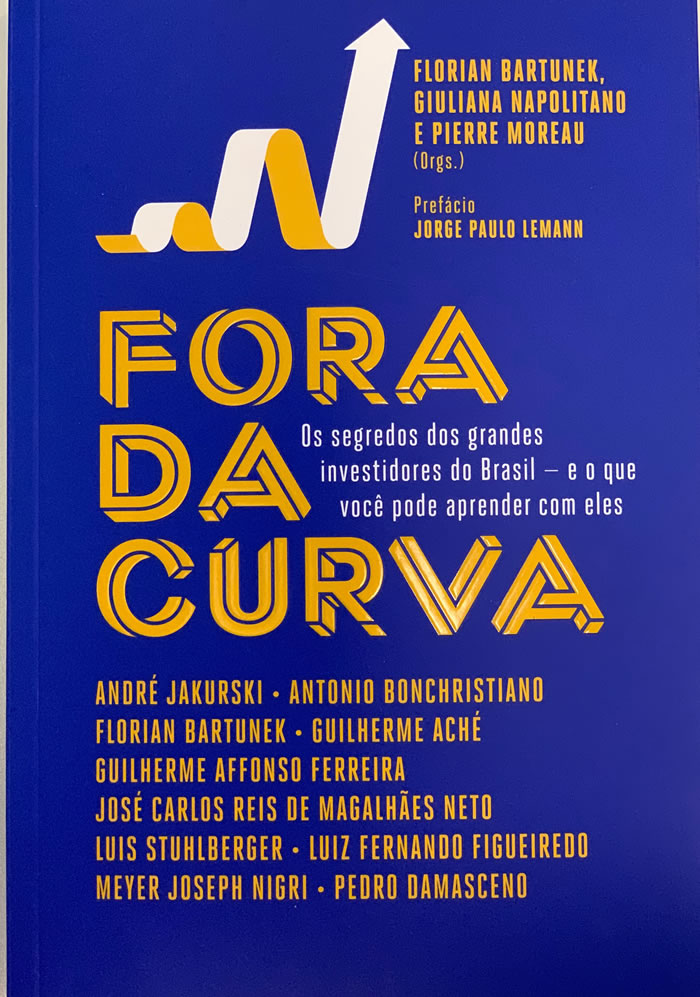
And what you can learn from them / Florian Bartunek, Giuliana Napolitano, and Pierre Moreau (eds.); Preface by Jorge Paulo Lemann; Presentation by Giuliana Napolitano;
Introduction by Florian Bartunek and Pierre Moreau – 1st ed. – São Paulo: Portfolio-Penguin, a division of Editora Schwarcz S.A, 2016.
What is the secret of successful investors? Can they make money in any scenario? What do they do when they lose?
The stories of some of Brazil's greatest investors, told by themselves, help answer these questions. In honest and often surprising testimonies, they describe how they navigated crises, whimsical economic plans, and even periods of euphoria without losing their heads – and making, of course, good investments.
The ten investors featured here – André Jakurski, Antônio Bonchristiano, Florian Bartunek, Guilherme Ache, Guilherme Affonso Ferreira, José Carlos Reis de Magalhães Neto, Luis Stuhlberger, Luiz Fernando Figueiredo, Meyer Joseph Nigri, and Pedro Damasceno – have built interesting careers, starting companies from scratch, rebuilding companies, or working in highly competitive environments.
Besides valuable investment lessons, their careers offer inspiring advice for those just starting out and those looking to pivot their careers.

2013
Rio de Janeiro – 1st ed. – Casa da Palavra, 2013.
The world of courts, the webs of forensic bureaucracy, the spectacle of punishment, moral disapproval, justice sought and not achieved – all this, beyond marking the lives of those conventionally called legal professionals, is the perfect inspiration for Literature (...).
This anthology gathers stories from professionals who have succeeded in their legal careers, offering a small sample of the panorama unfolding before their eyes. Different writings, they are moments of fear, desire, joy, doubt, vanity, and surprise.

2012
Throughout the various stories emerging from conversations with prominent Brazilian legal professionals featured in this book, a common trait emerges: the idea that professional success in law is a complex process resulting from various factors.
Beyond dedication to studies, quickness in updating, skill in the art of rhetoric and persuasion, commitment to professional competition, or the chance of being in the right place at the right time, there is a common component to all cases: the passion for the science of law.
In the interviews in this book conducted by Pierre Moreau, this becomes evident.
The overlap between work and affection, originally spontaneous and involuntary, forges great advocates, energizes experts in codes, and inspires ingenious problem-solvers who test the fundamentals, limits, and even fallacies of the law. It is the meeting of inclinations and
vocations with legal knowledge that brings forth the challenges of this complex human construction that is Law, the ideal and millennial foundation of citizenship.
If the reader already has this passion, they will encounter in this book various paths to transform it into a rewarding activity. If not, there is a great chance that these stories of life, causes, and careers will serve as an example and great stimulus.
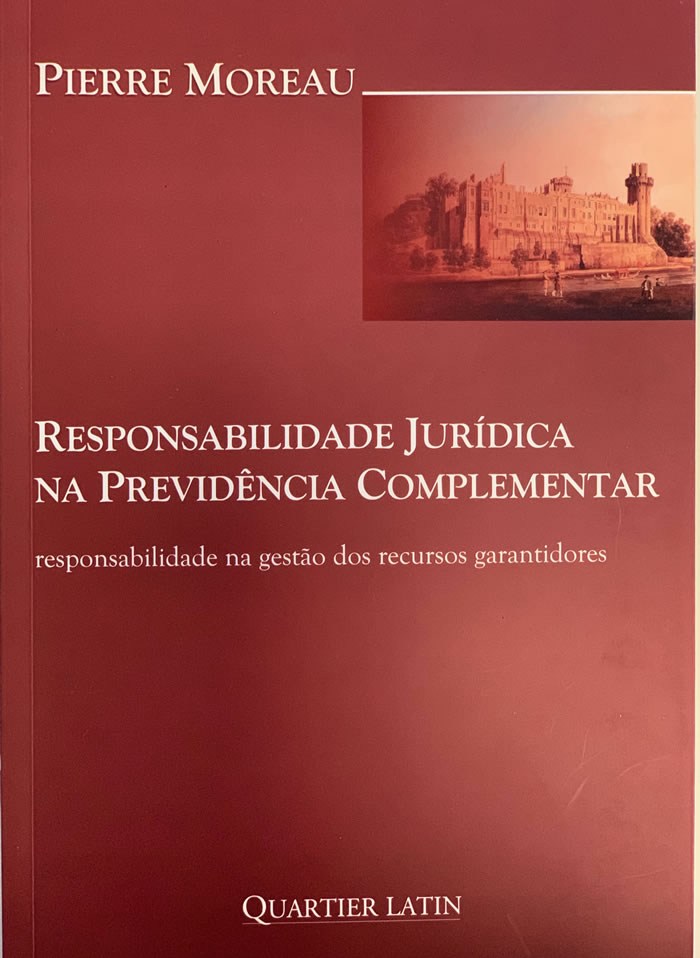
2011
Responsibility in managing guarantee resources* – São Paulo: Quartier Latin, 2011.
This book is the second accountability report to the scientific community, following the first, in which the author published their Master’s thesis.
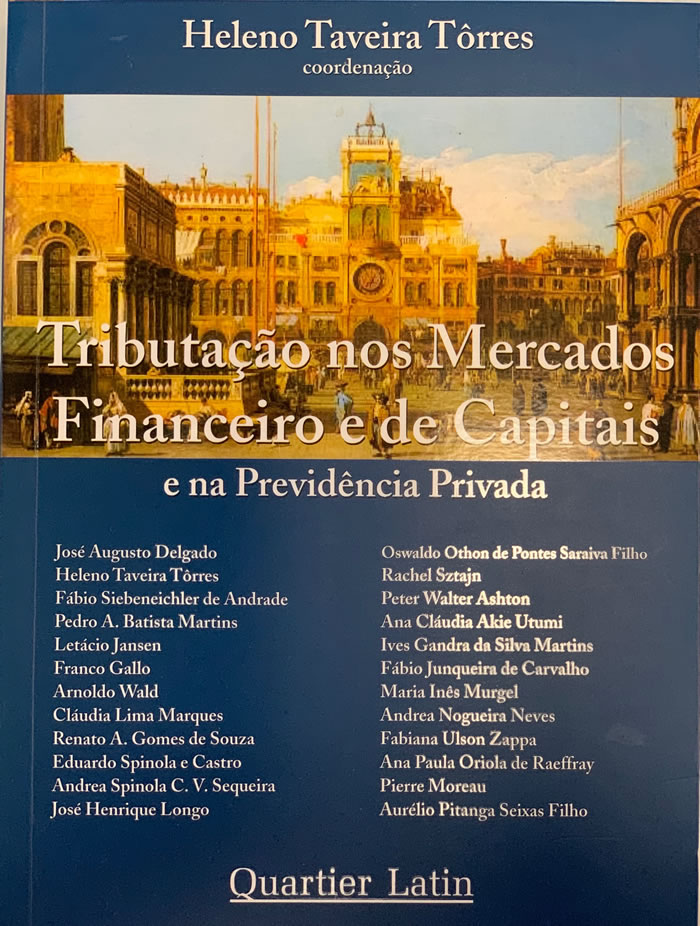
2007
Taxation in Financial and Capital Markets and in Private Pension* – São Paulo: Quartier Latin, 2007.
This work allows us to understand how eminent advisors perceive the role of Tax Law in our reality, which ranges from merely procedural concerns to more sophisticated categories of reflection and the functions of tax in the Social State of Law.
Therefore, it is a mandatory read for anyone interested in Law in the context of its application.

2005
The Financing of Social Security in the European Union and Brazil* – São Paulo: Quartier Latin, 2005.
This book aims to analyze national issues by comparing the measures taken to address the three macro problems of Social Security financing, as previously mentioned, by European countries, the pioneers of Social Security, and Brazil's own approaches.
In this context, the work seeks to compare the treatment of the three macro issues of financing in Brazil and the European Union, revealing that the Rule of Law brings numerous consequences.